Hydroelectric power plays an important role in Ireland’s renewable energy future, using the natural flow of water to generate clean electricity for homes, businesses and communities.
ESB owns and operates five hydro schemes on the Rivers Shannon, Lee, Liffey, Erne and Clady, with a combined capacity of 220MW. As each river system is different, our teams carefully monitor rainfall, reservoir levels and river conditions throughout the year to support safe operations, renewable generation and winter readiness.
Over the summer months, our the teams at our hydro stations carry out maintenance and preparation of the plants for winter.
How rainfall shapes hydro generation
Rainfall has a direct impact on hydro generation. The Met Éireann charts below show monthly rainfall totals for 2025 and for part of 2026, demonstrating how seasonal weather patterns can vary and in turn influence water levels.
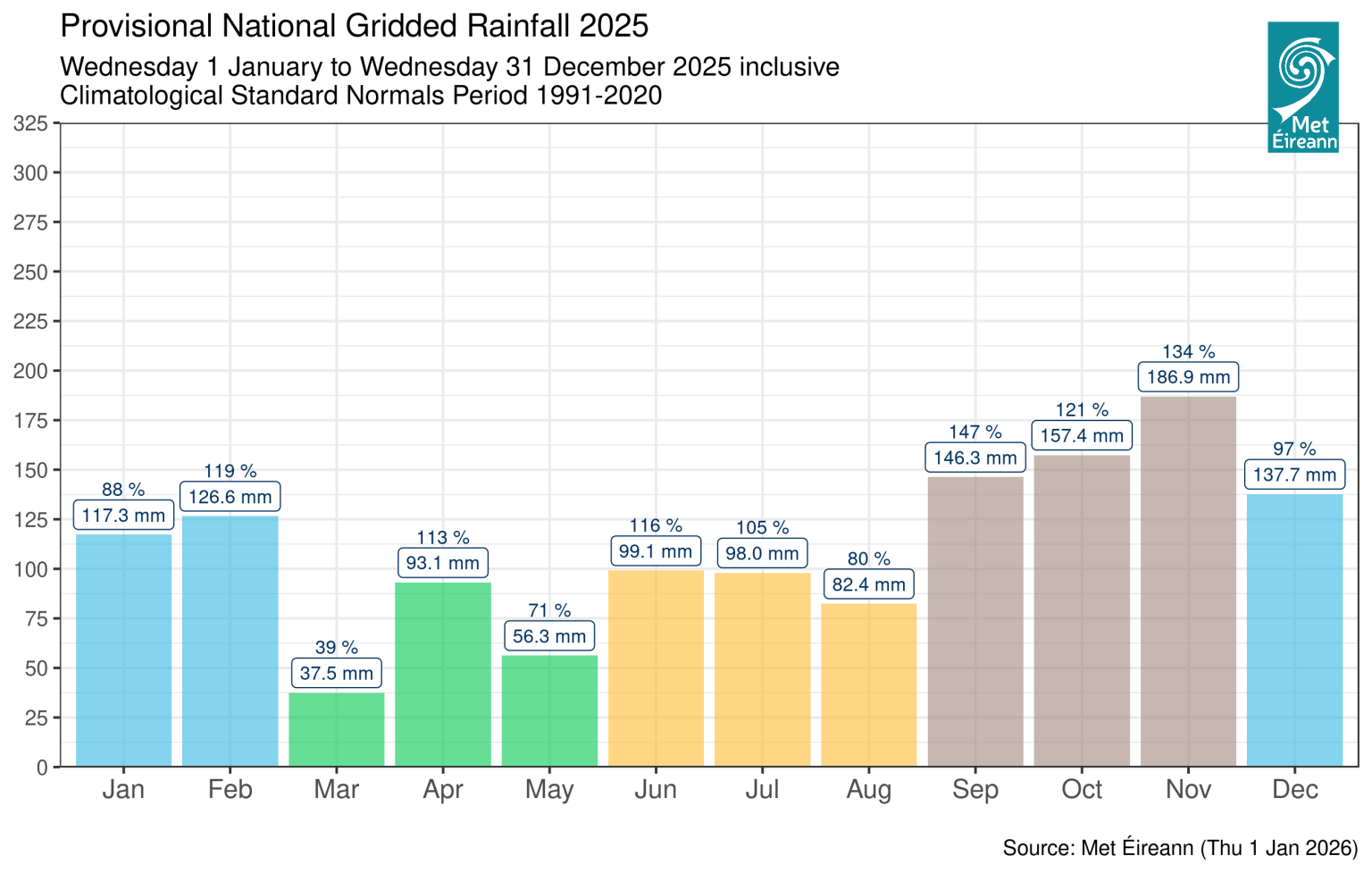
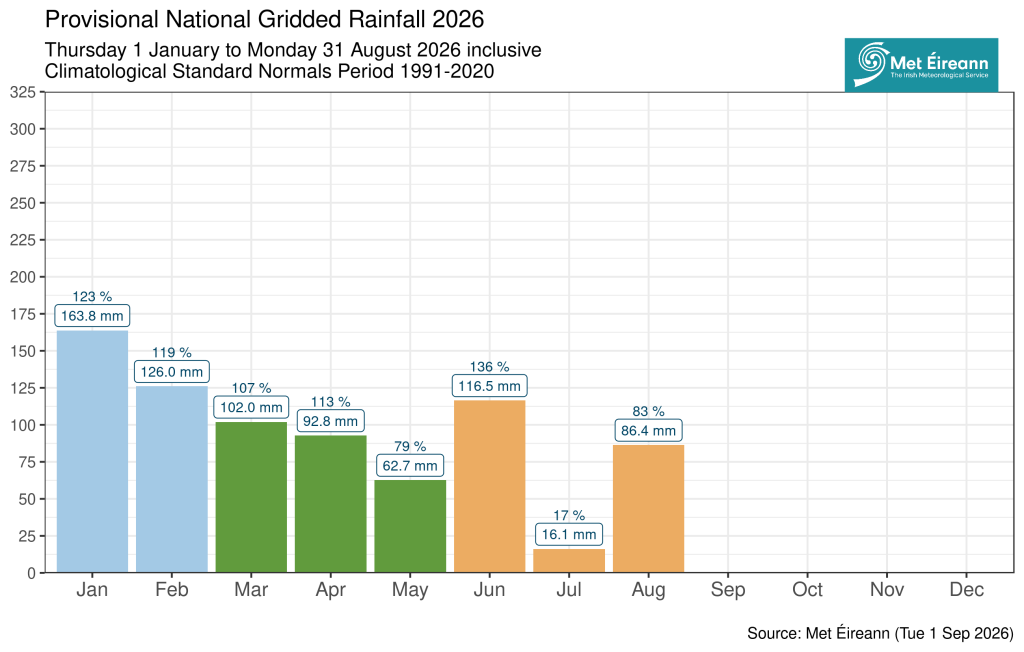
Figure 1 & Figure 2: Monthly rainfall totals 2025, partial 2026 Met Éireann
During a typical Irish summer, longer, brighter days and increased vegetation growth also reduce the amount of water flowing from land into rivers and reservoirs. With less water available, hydro stations may run less often.
Using the summer months for essential maintenance
This makes summertime an important window for inspection, maintenance and essential repair works before the typically wetter autumn and winter periods. Across our hydro stations, teams service and repair generating units, inspect dams and structures, maintain water control equipment and work with specialist contractors to support the continued safe and reliable operation of each scheme.
Sometimes more extensive overhauls of hydro plant and infrastructure are required; this can result in plant being unavailable for operational service across the year.
Key works underway in 2026
During 2026, maintenance work was focussed on the equipment and structures that help manage water safely and generate renewable electricity.
At Ardnacrusha in Co Clare, a major overhaul of one of the four hydro generation units is underway, with this work set to continue across the winter and into 2027. Maintenance work has also been carried out on large gates which form part of the water control infrastructure, as part of the station’s ongoing maintenance programme.
On the River Lee, summer works included an overhaul of one of the hydro generation units at Inniscarra station, along with work on water control equipment to ensure safe and reliable operation.
On the River Liffey, a unit at Poulaphouca station is being overhauled. While these works temporarily mean generation at the station is unavailable, teams are using the opportunity to complete other important maintenance, including concrete repair works. Water from the Poulaphouca reservoir travels to the station via a large tunnel, which was recently emptied to facilitate completion of detailed inspections and repairs.
Further downstream at Leixlip Dam, some of the gates which control the water underwent an overhaul this summer. These gates help manage the flow of water over the spillway of the dam. The work included installing new guide rails, anchor bolts and backing plates, with specialist diving and abseiling teams supporting delivery.
Across the wider hydro portfolio, ESB teams continue to inspect dams, monitor assets, carry out above-water and underwater surveys, clean and inspect culverts, and complete structural repairs where needed. Final maintenance tasks are now being completed across ESB’s hydro stations, while teams continue to work with local authorities and state agencies in preparation for the winter period.
Managing river systems during heavy rainfall
While it is not possible to predict how the weather will be or what storms may occur in advance of winter, ESB hydro infrastructure is designed to safely pass very large volumes of water through the dams. Ensuring the safety and structural integrity of the dams is always ESB’s highest priority, as this in turn ensures the safety of downstream communities.
During heavy rainfall, we store or divert large inflows of water where possible helping to reduce the impact of the rainfall downstream and mitigating flooding. However, heavy or sustained rainfall can exceed reservoir storage capacity, meaning excess rainwater may need to be passed through the dam, to ensure dam safety and the safety of communities downstream. For any of the dams, if significant rainfall occurs for very prolonged periods, there will be a risk of flooding downstream.
We plan for a range of conditions, with a view to minimising the impact on the dams and the communities involved and works closely with relevant local authorities and state agencies in preparation for the winter period.
